

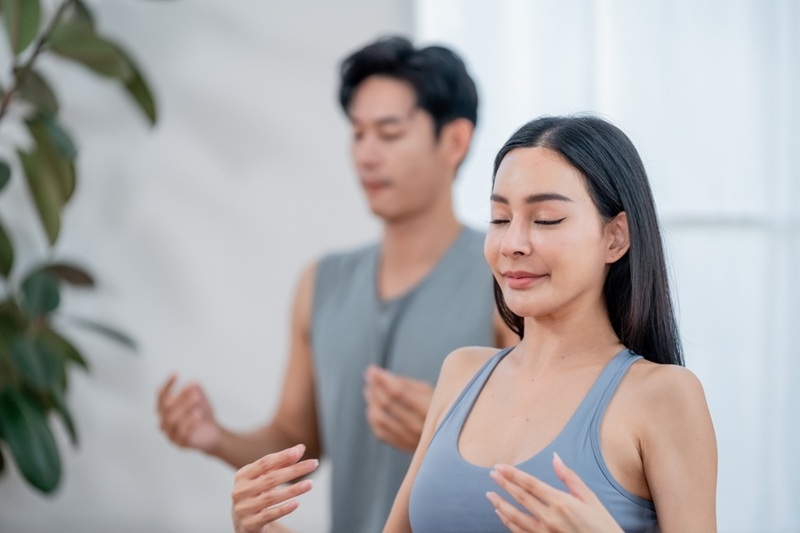
When you practice mindful awareness, you develop clarity of mind, increased concentration, and enhanced overall health. Mindfulness exercises include simple meditation, breathing, and relaxation techniques that help you reduce stress and create a more balanced life. Mindfulness exercises can help change the way you think, feel, and act in our fast-paced society.
When engaging in purposeful mindfulness exercise, you create a distance between yourself and your thoughts. During mindfulness practice, you learn how to become aware of your mental, emotional, and physical states without judgment. Practicing mindfulness has been shown to help reduce stress and emotional imbalances and to increase your ability to think clearly.
At its core, mindfulness is paying attention to everything that happens in the present moment through direct experience (non-judgmentally). Mindfulness training provides you with the opportunity to observe your thoughts without getting caught up in them – it helps you develop the ability to respond rather than react when making decisions and to control your emotions.
Mindfulness exercises, when practiced over time, improve concentration, reduce anxiety, and enhance emotional well-being. Additionally, mindfulness exercises support better sleep and increased productivity, making them an important part of living in today's fast-paced world.
By focusing on the present moment and eliminating distractions, mindfulness exercises help you clear your mind of clutter. In doing so, you will be able to think more clearly, retain more information, and become more creative with your ideas.
Mindful exercises are easy to incorporate into your daily routine without taking hours of your time. Just a few minutes done regularly will have an impact.
Breathing exercises are great beginner mindfulness exercises. You can practice breathing by paying attention to taking deep breaths in through the nose and out through the mouth. Focusing on this will help calm your nervous system and bring a state of relaxation.
Begin with short meditation sessions and increase the time as needed. You can also use guided meditations if you feel like you want help finding your way. Try to find a quiet area free of distractions. The more you meditate consistently over time, the more you will be able to enjoy the long-term benefits.
Body scans and progressive muscle relaxation are examples of relaxation exercises that reduce tension and provide stress relief, enhancing physical and mental well-being.
Mindful exercises can be practiced while moving as well as being still. Practicing mindfulness during a walk, while eating, or even at work can help you stay focused on the activity you are performing by using your five senses.
Choosing the right mindfulness practices can greatly enhance your ability to manage stress and maintain a clear mind.
A body-scan meditation helps people develop deep awareness of their bodies by focusing on each part separately and identifying bodily sensations. This type of mindfulness exercise can be very powerful in providing relaxation and reducing stress.
Visualization is another excellent way to practice mindfulness, focusing on visualizing something pleasant (such as the ocean) and using it as a vehicle for working through anxiety and building emotional stability.
Practicing gratitude can also be an effective way to shift your thoughts from the negative to the positive; therefore, it is a great way to improve mental clarity and overall emotional health.
The final style of practise is to journal about your thoughts; this can be an outstanding way to release thoughts, help process them, bring clarity to you, and reduce mental clutter.
Mindfulness activities are important for helping you achieve a clear mind, lower your stress levels, and improve your overall health. To achieve ongoing stress relief and greater balance in your life, consider adding simple breathing exercises, relaxation techniques, and different types of meditation to your daily activities. Begin with just a few minutes each day, be persistent, and enjoy how transforming your life by using mindfulness activities will impact your body and mind.
Mindfulness exercises require 10 minutes daily, and people generally feel the benefits after 2 weeks of daily practice, consistent use,s and lots of patience. Short sessions paired with breathing techniques work great for improving mental clarity and giving you a great, lasting relief from stress
Mindfulness techniques complement traditional Stress Relief techniques, but shouldn't fully replace them. You can integrate relaxation and breathing techniques, along with professional support, with your Mindfulness Techniques to achieve perfect harmony with mind clarity, providing long-term Stress Relief and Emotional Stability for good health.
Mindfulness Exercises are perfect for new Mindfulness Practitioners, as they require no prior experience. Start with simple breathing techniques first, or use some basic meditation techniques, which will make it easier for you to develop through incorporating relaxation techniques into your daily routines, a gradual process to develop mental clarity and provide great Stress Relief to all new Practitioners.
The best time to practice mindfulness exercises depends on individual preference; morning mindfulness can improve mental clarity and focus, while evening mindfulness can help with relaxation and stress reduction. However, regardless of when you practice, maintaining a regular practice of meditation and breathing techniques will provide you with the greatest benefit.
Mindfulness exercises have a positive effect on physical health by reducing stress hormones and improving sleep quality. When practiced regularly, breathing techniques and relaxation exercises will also support heart health and boost your immune system, ultimately contributing to your overall health. All of these factors will lead to increased mental clarity and longer-term stress relief results.
This content was created by AI